Object Care
My specialization in my Museum Studies graduate degree was in collections management. Through this formal training, as well as a number of internships and post-graduate work experience, I gained the essential skills needed for collections care and registration. I am comfortable handling all kinds of objects from works on paper to large sculpture. I am experienced in condition reporting of 2D and 3D objects including photography, annotation, and detailed descriptive markers. I have prepared condition reports as part of routine collections management as well as for loans, transportation, and exhibition.
I am also capable in preventative conservation tasks like cleaning, mount-making, housekeeping in collections spaces, environmental monitoring, numbering and labelling, and preserving collections information through cataloging. The databases/collections management systems I have significant experience using are: The Museum System (TMS), Re:Discovery, EMu, MimsyXG, Axiell Collections, CollectionSpace, Filemaker Pro, Past Perfect, Microsoft Access, Archivist Toolkit, ARCTOS, Specify.


Collection Storage and Environment
While working in museum collections storage spaces I have completed a number of collections moves, worked on future storage space assessments, used 3D modeling software for designing and planning future spaces, and conducted environmental monitoring and pest monitoring (IPM). At the University of Colorado I was the graduate student collections assistant on the move of the entire mammology and osteology collections. This move included handling 18,000+ specimens. As an intern at the Phoebe A. Hearst Museum of Anthropology I assisted with imaging, packaging, and tracking objects during the move of the entire archaeology collection.
I have been responsible for maintaining a regular housekeeping routine of vacuuming, pest monitoring (IPM), pest identification, and environmental monitoring with dataloggers (hygrothermographs, HOBOs, and PEM2s). I have also conducted and designed special monitoring projects oriented at narrowing the source of an infestation, determining environmental conditions in a new room in advance of a collections move, and testing the effectiveness and calibration of different types of dataloggers.
As part of my master's thesis project on basketry collections preservation I conducted an extensive storage space assessment of the entire basketry collection (hundreds of objects) in preparation for a future move. This move plan was later implemented and the collection's storage has been greatly improved. I also produced a detailed guide and a pamphlet to assist others with similar projects.


Digitization and Photography
My first experience ever working in a museum was working on a massive initiative to digitize 14,000+ images (prints, glass plates, other negatives) at the Museum of Vertebrate Zoology in Berkeley, CA. In 2011 I began by doing data entry and georeferencing on these photographs. In 2014 as part of an MVZ Archives volunteer popsition I processed and worked to digitize the 3000+ slide collection of Curator of Mammology James Patton. This included working with Archivists' Toolkit, the Online Archive of California, and ARCTOS to digitize associated data and accompanying images. I even wrote a blog about my wonderful experiences at the MVZ. Later on in graduate school I also organized a training for students on digitization of natural history collections with iDigBio.
I am also experienced in object photography for cataloguing, publication, and exhibitions. As a graduate student I went through a series of photography trainings from a professional photographer.


Mounts and Rehousing
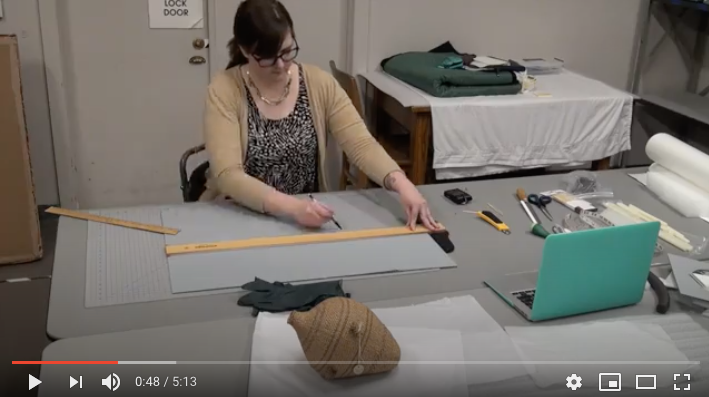
One of the things I enjoy most about collections work is making mounts to protect collections and reduce handling of objects. This is something I have a lot of experience with and is also something I have taught to others in several workshops and webinars. As part of my thesis project on preserving ethnographic basketry collections, I produced a series of how-to mount-making videos as well as some printed guides and pamphlets to help other museum professionals. I wrote an article about this project for the industry website Museum Trade . These are some samples of the variety of storage mounts I have made.
I have also worked on a number of large scale rehousing projects, many of which involved making mounts and improving the storage of collections items. As part of a course in advanced collections management I created a plan for the rehousing and revised storage of a collection of invertebrate fossils. My proposal also included budgets for supplies, cabinetry, and staff and a detailed workflow. I also organized the rehousing of a large photographic collection of glass plate negatives for the Norlin Library Archives at the University of Colorado. The glass plates were housed in extremely poor conditions leading to a high percentage of breakage. My task was to develop a protocol to rehouse the glass plates using new boxes and four-folds and to capture all the data and preliminarily catalog the collection. As I was encountering broken plates I was able to scan them and work with the preservation department get them properly mounted.




Storage Design
In addition to using SketchUp in exhibition design, I have also used this program to map out storage and rehousing plans for museum collections. In one project I used SketchUp to model a drawer rehousing project and new cabinetry layout for an invertebrate fossil collection. The goal here was really to maximize space efficiency and test out different scenarios to use up as few drawers as possible.
In another project I used SketchUp to model two different scenarios for a future remodel of the collections storage of the CU Heritage Center. Based on floorplans provided by the client, desired outcomes, and measurements of existing furniture, I was able to manipulate the components in SketchUp to devise the most efficient use of space and propose multiple options to the client. I also developed budgets and cost proposals for each scenario to argue for efficiency.


